
Due to the Trade Aid Sweet Justice chocolate factory closing down last year, we’ve had to look for a new chocolate supplier. We were lucky to come across Weave Cacao, a wonderful chocolate maker based in Aotearoa New Zealand and working with cocoa growers in Papua New Guinea. Their business model is unlike any other in the commodified world of chocolate.
We got in touch with Tesh from Weave to find out what makes them and their chocolate unique.
What inspired the creation of Weave Cacao?
One of our founders (Oonagh) has worked with European couverture chocolate for many years. When her journey took her to the Pacific, she saw the reality of cacao farming communities living in poverty. That’s when a vision started to form of a whole new possibility, one that cared for and empowered the cacao farmers and their families in a real true way.
There are 2.5 million cacao farmers across the Pacific, with cacao often being their only cash crop. These farming families are subject to the world stock market pricing for bulk cacao. New Zealand currently imports over 5,000 tonnes of couverture chocolate, with zero sourced from the Pacific. Weave is working to change this, and bringing to Aotearoa a local Pacific couverture chocolate that is world-class in every way. It does this by being on the ground and working hand in hand with the cacao farming families.
What makes Weave unique (i.e. different from other chocolate manufacturers)?
Weave is unique because we are first of its kind. We combine a master chocolatier’s knowledge of couverture chocolate, a master craft chocolate maker’s knowledge of flavour and the skills of a wider team who are 1000% dedicated to putting the lives of the cacao farming communities of the Pacific first in the process of making world-class chocolate.
Weave isn’t certified fairtrade or organic, rather we are about direct real connection, care and empowerment of cacao farming families and from there making the best couverture chocolate in the world. We are on the ground in Papua New Guinea every 3-4 months.

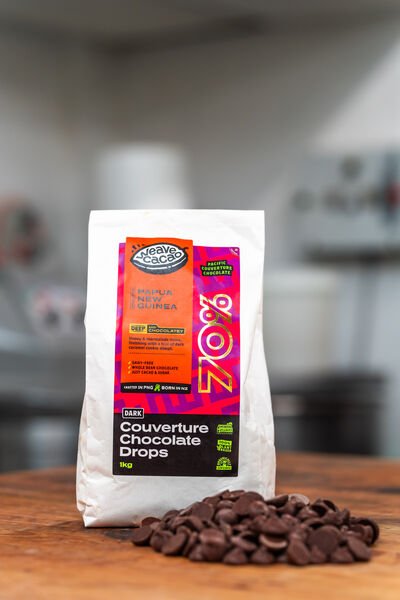
In addition Weave’s chocolate is lecithin-free, made in the country of origin (as in where the cacao actually grows), and from cacao beans that are under three months old.
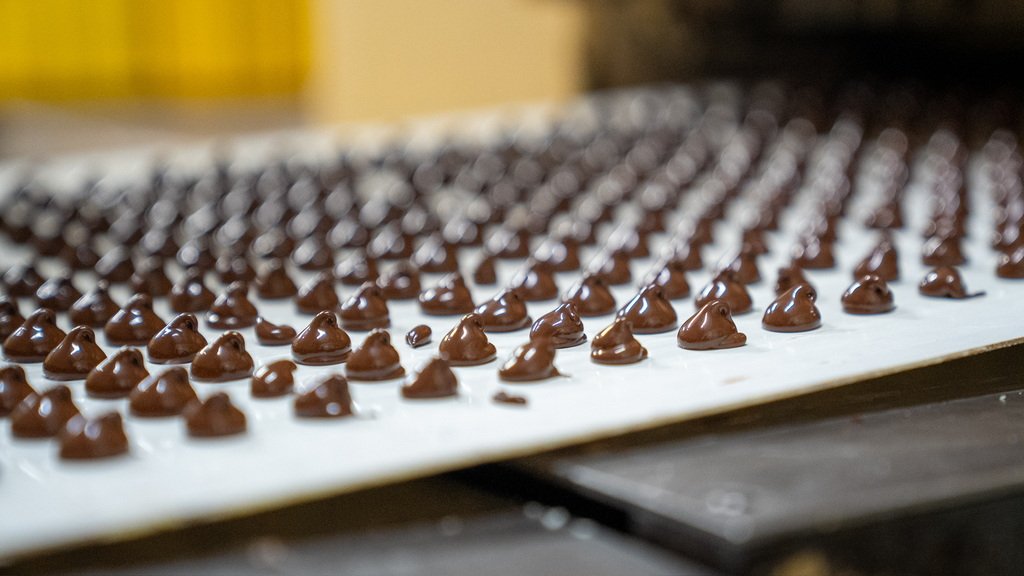
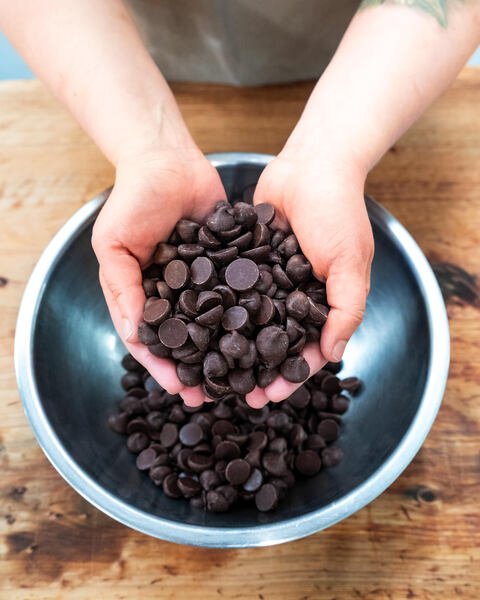
We achieve world class couverture chocolate with minimal processing. We roast, dehusk and crack the bean, grind it into a paste, refine it whilst adding extra cacao butter and sugar, temper it and form it into drops. That is it. We do not adapt, add, squeeze out some butter, or add anything extra. We keep it clean, pure and showcasing how couverture chocolate can truly be pure and delicious.
And we are transparent. We share the whole story from our communities, from the trees to how we make Weave, holding nothing back. This is to inspire transparency in the chocolate industry as a whole, so change can truly happen for the good of all through the love of chocolate.
What are the problems associated with the current, commodity-based model of chocolate manufacturing?
The price cacao farmers receive is determined by the stock market and global trading, rather than what the real cost and value are. It can escalate or crash, and the farmers have no say.
Quality can be affected because the cacao farming communities around the world do not consume their own cacao. It is all about price. When there is a sudden exponential price increase, for communities who do not have experience in having large sums of cash, all kinds of issues can ensue. The current model is based on profit and global consumption rather than local impact.
Because of the lack of transparency, green washing terms can be used. There is no desire to communicate how the lives of the farming communities are being supported by the chocolate brand.
Why Papua New Guinea? Why is producing chocolate directly in PNG important for you?
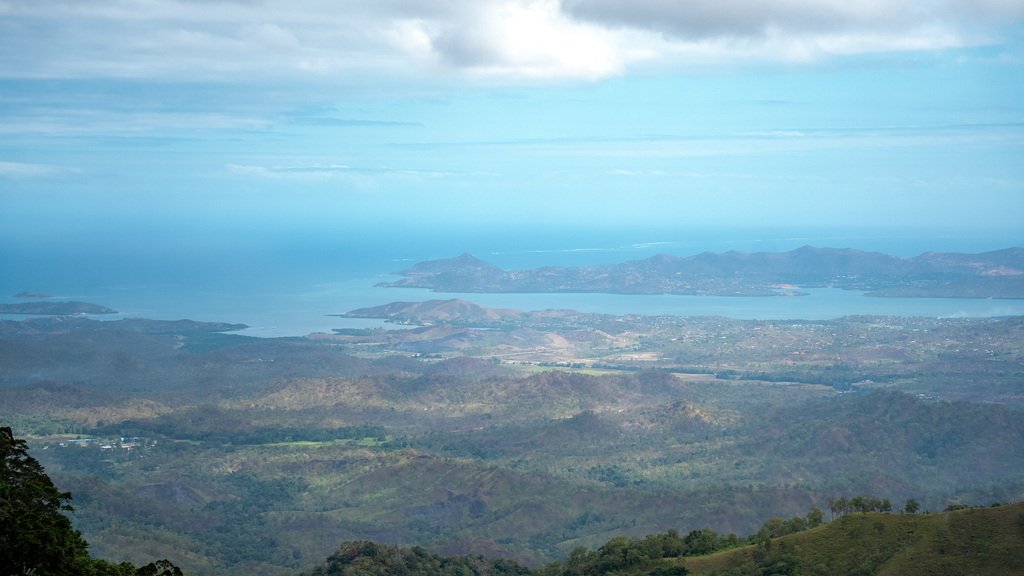
Of the 2.5 millions cacao farmers of the Pacific, 2 millions live in Papua New Guinea.
PNG is one of the least visited countries in the world and is often the forgotten nation of the Pacific. One of our founders, Oonagh, had worked in PNG for 18 months before the launch of Weave. She knew of a factory, that although it has old equipment, had everything needed to make chocolate.
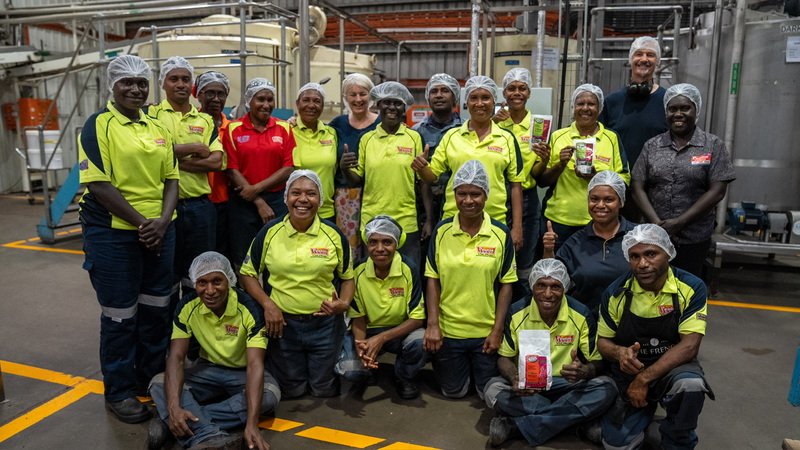
We want every step in this process to matter and so we made the decision to produce in PNG. By actually producing in PNG, we can uplift the local chocolate industry by showing what’s possible, ensuring employment, and developing local people’s skills so the factory itself can reach a wider market through their own products.
Producing in the country of origin is rare because there are many wild cards such as power issues and heat. But our hearts said this was the right thing to do. We took on the challenge and are now seeing such incredible change on the ground in PNG as a result. Producing in country is creating change for the better beyond our greatest hopes.
How does Weave ensure fairness throughout the supply chain?

Weave’s unique model relies on what we call the 3 Ps:
Price: setting a long-term, true real price for cacao that does not change with the world stock markets.
People: working hand in hand with our farming communities, adapting to the specific needs of each village and Pacific country.
Pride: cacao farming has been seen in the Pacific as a low-income and low-return crop. One cacao farmer shared with us how his teacher used to say to the class “Do your homework or you will end up a cacao farmer”. We want cacao farmers to thrive and be proud to work with this incredible crop, and with a brand they are proud of.
Most of the chocolate made nowadays contains lecithin. What is it and why is it needed?
In the cacao bean there is a natural ratio of butter and powder. Sometimes up to 50:50 of each. Cacao butter is highly valuable, and often an amount of cacao butter will be pressed out of the bean and a small amount of lecithin added in its place. A tiny amount of lecithin will replace up to 10% cacao butter. When working with chocolate machines the fluidity of the chocolate is essential for chocolate makers and this can be achieved by adding more cacao butter or lecithin, or both.
At Weave we have chosen to to be as pure as possible with only two ingredients. The cacao bean, extra cacao butter from the same beans and sugar. In this everyone can choose how pure they would like their chocolate to be.
How does Weave’s work in PNG impact the local communities and the environment?
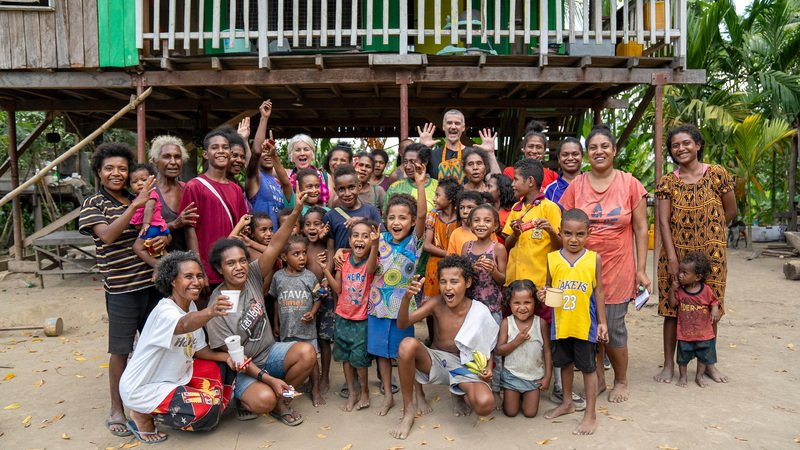
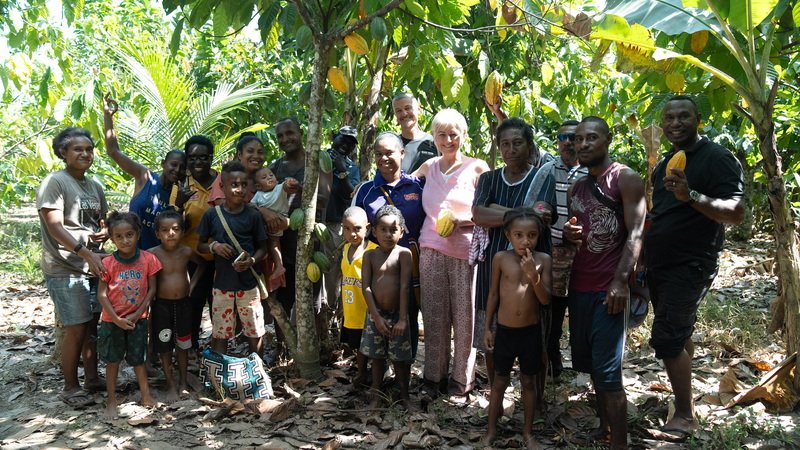
We are about meeting the dreams of the communities we work with. By changing the perception of cacao farming in the Pacific, transforming it from a low-regard career to a respected, viable livelihood, we aim for them to have the cash to pay for school fees, to create better futures for their children, to have access and be able to afford medicines, and be able to dream of a new future.
And through the charitable trust that owns 26% of Weave, we will work on new programs such as biodiversity, soil health, village-level savings and so much more to ensure thriving communities through cacao.
What was the most surprising thing you’ve learned from working directly with cacao farmers in PNG?
That none of the cacao farming communities consume their own cacao. The disconnect between the farming family and cacao is hard to imagine because it is so great. Cacao has been grown in PNG for over 100 years and we will meet farming families who again and again answer “No” when we ask if they have ever consumed their own cacao. Whereas it will always be a “Yes” when asked if they drink Milo. Most do not know that Milo is made from some amount of cacao. They were shown how to grow cacao and export it but not consume it locally.
What should we be looking for in a quality chocolate?
A quality chocolate should be all-consuming! The fragrance, the mouthfeel, the upfront chocolate notes, and the lingering flavour after it has dissolved on the palate.
And behind this the transparency of the farmers’ lives who have provided the cacao beans as this too will be an important flavour.
As we know no two versions of the same recipe will taste the same, as the cook’s love and energy will be felt in it. It is the same with chocolate. The love and care in every step will be felt.
Do people in PNG eat chocolate?
With the exception of the capital Port Moresby and the expensive supermarkets, sadly no.
- It is not available.
- The climate is too hot and the chocolate would melt.
- The cacao farming communities do not know what the cacao bean is or what it is used for currently. We are working to change this!
How long does it take to create chocolate from cocoa beans?
It depends on where you want to start!
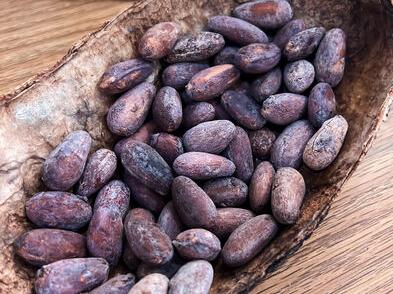
- A cacao tree from seedling will produce fruit within three years of being planted. A cacao pod will take 6 months from flower to pod.
- Fermenting and sun-drying the beans from a ripe pod will take two weeks.
- Shipping to the factory to be transformed into Weave: two weeks.
- Transforming into Weave for roasting to nibs to paste to couverture chocolate to drops, is another 5 days.
For other chocolate the cacao beans could take 3-4 months on a ship to reach the factory. Then it can be stored for a number of years before being transformed into chocolate.
What’s a little-known fact about cacao that you feel every chocolate lover should know?
The cacao bean is one of the most incredible superfoods there is. Packed with antioxidants, magnesium, iron, happy chemicals for the brain and so much more. When chocolate is made with minimal interference, and only from the whole bean, we can claim it is good for us!
What is your long-term vision for ethical cacao production, both for Weave and the broader industry?
Our dream is that every cacao farming community can truly thrive through cacao. We want chocolate lovers to know what chocolate should cost and be willing to pay this price. We hope that the chocolate industry becomes inspired to change because Weave has shown the way of what is possible for the farmer, for quality and for the consumer.
Thank you Tesh for helping us understand the raison d’être and mission of Weave Cacao!
We hope that, like us, you feel inspired to support Weave’s mission of empowering Pacific cacao farmers through beautiful chocolate. You can taste Weave’s chocolate in all our products with chocolate: Pain au Chocolat, Walnut & Salted Caramel Brownie, as well as our seasonal Chocolate & Hazlenut Stollen.
Want to find out more? Check out Weave’s website, it’s full of beautiful pictures and interesting information.